Savannah Sprinkler Heads Not Popping Up After Mowing
A sprinkler head that worked last week can disappear after one mowing pass. In Savannah yards, the clue is often small: a pop-up head sits too low, a nozzle sprays under the turf edge, or water bubbles at the base instead of lifting the stem.
Do not assume the mower ruined the whole zone. A weak head after mowing can come from a buried cap of grass, a cracked riser, pine straw packed around the body, a clogged nozzle, or pressure loss from a nearby leak. The fastest way to narrow it down is to run the station briefly and watch what each head does in the first minute.
Start with the head that changed
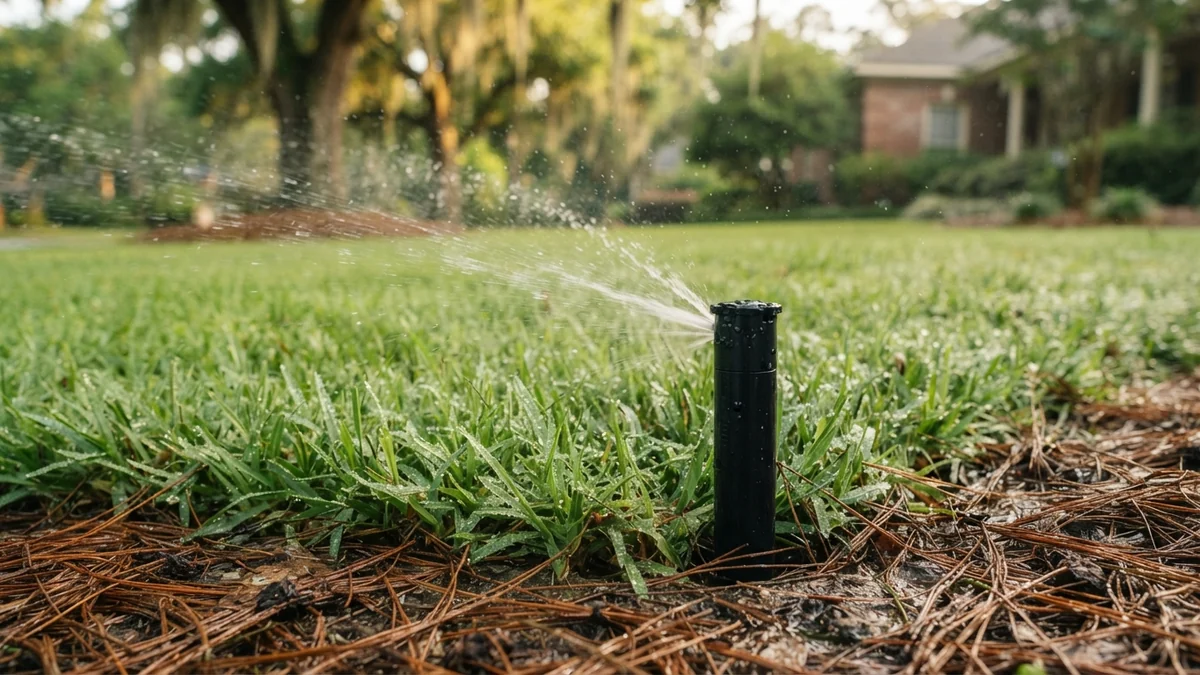
Look for the head that sits lower than the turf, leans toward a bed, or sprays in a short fan instead of clearing the grass. Fresh edging can also leave soil, roots, or turf pressed against the pop-up stem. If the stem rises when you pull it gently but drops again during the cycle, the body may be blocked or the zone may not have enough pressure.
Savannah lawns with pine straw beds add another wrinkle. Straw can pack around low heads and hide a broken riser. The head may look like it is not popping up, but the real issue is water escaping below the nozzle before pressure can lift the stem.
- One head stays low while the rest of the zone sprays normally.
- Water bubbles around the head body after the station starts.
- The nozzle clears the ground only if you lift the stem by hand.
- Fresh mowing, edging, pine straw, or bed work happened near the head.
- Savannah sprinkler head repair — Use this when one pop-up is low, tilted, clogged, cracked, or spraying into the wrong area.
- Why a Savannah sprinkler head bubbles at the base — Useful when water escapes around the body instead of lifting the spray head.
Separate one bad head from a weak zone
If every head on the station rises poorly after mowing, the mower may be a coincidence. A zone-wide pressure drop points toward a valve that is not opening fully, a line break, a clogged filter, or a leak before the heads. A single low head points more strongly toward head height, riser damage, dirt in the nozzle, or a local obstruction.
Run another station for comparison. If other stations run normally, write down the problem station number. If several stations are weak, the conversation may shift away from the head and toward supply, controller, or valve diagnosis.
- Savannah sprinkler zone repair — Use this when a whole station starts weak, skips, or will not shut off.
- Savannah irrigation leak repair — Use this when wet soil, pressure loss, or bubbling points below the surface.
Check for clogging without digging up the yard
Sandy soil, grass clippings, and pine straw can clog a nozzle or screen after yard work. A clogged nozzle usually gives you a distorted spray pattern, misting, or no spray from one head while the stem still rises. A cracked riser or leak is different: water escapes below the head, the soil gets wet, and nearby heads may lose pressure.
Avoid digging around irrigation lines unless you know where they run. A quick visual check is enough for the call: head location, station number, whether the stem rises, whether water bubbles, and whether the rest of the zone is strong or weak.
- Savannah sprinkler troubleshooting checklist — Use this to organize head, zone, valve, controller, and leak clues before calling.
- Savannah sprinkler repair cost guide — Compare likely cost factors after you know whether the symptom is a head, valve, or leak issue.
What to say on the call
Say whether the issue started after mowing, edging, pine straw refresh, planting, or other yard work. Mention if one head is low or if the whole station is weak. If water bubbles around the body, say that plainly because it can change the likely repair from adjustment to riser or leak work.
Photos help if the head is buried, tilted, or too close to a bed edge. A useful call starts with the exact station, the changed head, and what the rest of the zone did when you ran it.
- Wet pine straw and sprinkler leak clues — Useful when the low head sits near pine straw or a damp bed edge.
- Savannah sprinkler repair homepage — Start here when you need the main repair paths and phone number.
Questions to ask when you call
- Does this sound like a low sprinkler head, cracked riser, clogged nozzle, or weak zone?
- Could mowing or edging cause one head to stop popping up?
- Should I run the station before calling?
- What details help separate head repair from leak tracing?
Related repair guides and manufacturer help
- Sprinkler head repair guide — For low heads, cracked risers, bubbling pop-ups, and spray adjustment.
- Irrigation leak repair guide — For wet soil, pressure loss, hidden line breaks, and bed-edge leaks.
- Bubbling sprinkler head guide — Useful when the head does not rise because water escapes at the base.
- Troubleshooting checklist — Use this to organize station, head, valve, controller, and leak clues.
- Savannah sprinkler repair cost guide — Compare likely cost factors for heads, valves, leaks, and diagnosis.
Need help with sprinkler repair in Savannah?
Call 912-600-3745 and describe the symptom, where it appears, and what changed before it started.
Call 912-600-3745